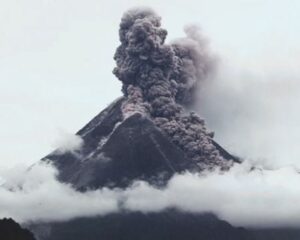
No one expected the 2010 Merapi eruption would be so devastating. Residents along the slopes of Merapi were accustomed to eruptions
They had lived with them for decades, with eruptions occurring almost every year-round. But in 2010, Merapi erupted millions of tons of hot material, its largest eruption in 100 years.
The government at the time had ordered all residents within the danger zone to evacuate.
The 2010 Mount Merapi eruption caused many deaths due to several powerful and unexpected volcanic hazards around Mount Merapi.
1. Extremely Powerful Eruption
The 2010 eruption was one of the largest in over a century. Explosive blasts sent ash clouds and volcanic material high into the atmosphere.
2. Deadly Pyroclastic Flows
The most dangerous factor was pyroclastic flows—super-hot clouds of gas, ash, and rock moving up to 100 km/h.
Temperatures can exceed 600°C, destroying everything in their path.
3. Larger Danger Zone Than Expected
Scientists initially estimated a smaller danger zone, but the eruption became much stronger, sending pyroclastic flows farther than predicted, reaching villages outside earlier evacuation areas.
4. Some Residents Refused to Evacuate
Some people stayed behind to protect homes, farms, and livestock. Others trusted spiritual guardians like Mbah Maridjan, who also died during the eruption.
5. Dense Population Around the Volcano
Thousands of people live on the fertile slopes of Merapi because volcanic soil is very good for farming. This high population density increased casualties.
6. Nighttime Eruptions
Several major eruptions occurred at night, when evacuation and visibility were more difficult.